Supply chain executives face an unprecedented challenge: measuring accurately Scope 3 transportation emissions while navigating complex global logistics networks. Traditional methods rely on industry averages that miss the mark by significant margins. However, digital twin technology offers a game-changing solution that transforms how companies track, understand, and optimize their transportation carbon footprint.
What is a Digital Twin in Supply Chain Transportation?
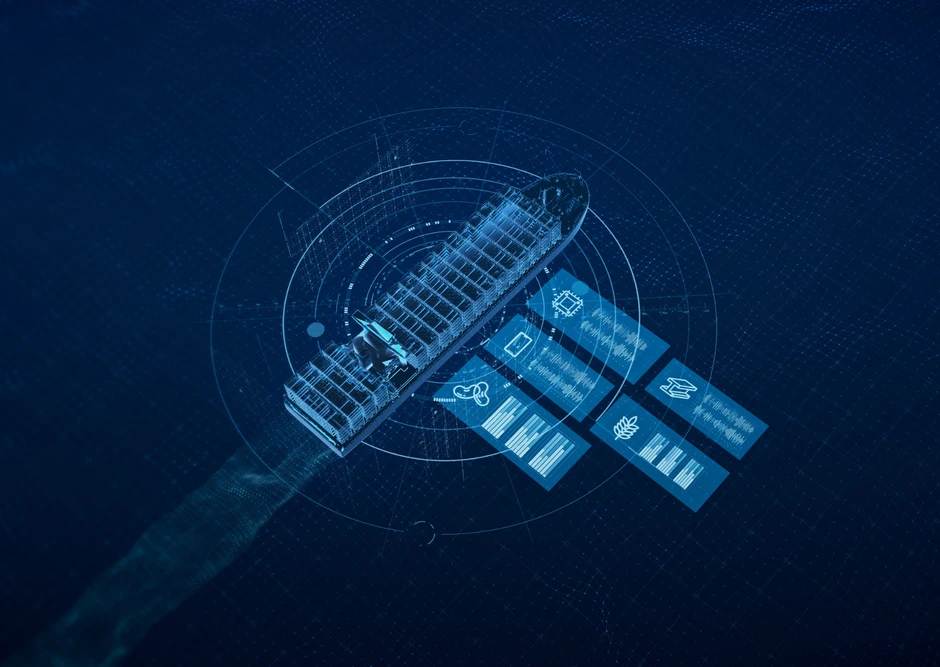
Imagine having an exact virtual copy of every vessel and aircraft in your transportation network. This digital replica mirrors real-world conditions in real-time, incorporating live data from GPS tracking, satellite feeds, weather conditions, and operational parameters. That's essentially what a digital twin does.
Unlike static spreadsheets or basic calculators, digital twins continuously evolve with actual, real-time operational data. Consequently, executives gain unprecedented visibility into their transportation networks with accuracy levels reaching 92% with regard to actual emissions.
The growing recognition of digital twin value is reflected in market adoption. The supply chain digital twin market, valued at approximately USD 2.8 billion in 2023, is projected to reach USD 8.7 billion by 2033, representing a 12.0% compound annual growth rate.
Why Digital Twins Matter for Supply Chain Emissions?
The Problem with Average-Based Methods
Most companies still calculate transportation emissions using generic industry averages. These one-size-fits-all approaches fail to capture crucial variables like:
- Maritime: Weather conditions that affect fuel consumption, vessel utilization rates that dramatically impact emissions per container, and ETA changes caused by port congestion.
- Aviation: Aircraft-specific performance variations, payload distributions between cargo and operational factors, and flight path deviations due to air traffic and delays.
- Trucking: Real-time fuel consumption variations, actual cargo loads versus capacity, idle times during loading/unloading, and traffic conditions affecting route efficiency.
- Universal factors: Geopolitical disruptions forcing route changes, seasonal weather patterns, and operational delays that impact fuel efficiency across all modes.
The Digital Twin Advantage
Digital twins solve these accuracy problems, but not all implementations are equal. For maritime transportation, our digital twins utilize AIS (Automatic Identification System) data for real-time vessel tracking. For aviation, they integrate with flight tracking systems for precise aircraft performance data. For tracking, our digital twins capture real fuel consumption via telematics and ELD data.
This comprehensive approach transforms emissions calculations from theoretical exercises into precise measurements. Instead of applying generic factors, VesselBot's digital twins use actual operational data from specific vessels, aircraft, and trucks.
However, to understand the full impact of this precision, it's important to grasp the key factors that affect transportation emissions across these modes.
Understanding Key Transportation Terms
Maritime Transportation
-
Vessel Utilization: How full a container ship is during its voyage (expressed as a percentage)
-
TEU (Twenty-foot Equivalent Unit): The standard measurement unit for container vessel capacity and cargo volume. One TEU represents the cargo capacity of a standard 20-foot shipping container.
- Emissions intensity: CO2 emitted per TEU-kilometer (g CO2e/TEU*km).\r\n\r\n
Aviation Transportation
-
Aircraft Utilization: How much cargo capacity is used during a flight.
-
Payload Allocation: How flight emissions are distributed among different shipments
- Emissions Intensity: CO2 emitted per ton-kilometer (g CO2e/ton*km).
Universal Concepts
-
Well-to-Wheel (WTW): Complete fuel lifecycle emissions from extraction to combustion
-
Well-to-Tank (WTT): Emissions from fuel production and transportation to the tank
How VesselBot Applies Digital Twin Technology
VesselBot has developed digital twins for all modes of transport, covering the entire global merchant fleet, cargo aircraft, and trucks. For ocean and air transport, we track actual distances, utilization, and actual operating conditions through our satellite data and integrate it into our advanced digital twin technology. Our connectivity with carriers also enables us to collect shipment data without hassle. For land transport, we monitor real-time fuel consumption of trucks using telematics and ELD data.
Our unique approach combines three critical elements:
1. Primary Data Collection
We prioritize real operational data over industry averages:
• Maritime: AIS tracking provides among other information vessel positions, speeds, course and routes
• Aviation: ADS-B flight tracking for aircraft performance
• Weather Integration: Real-time conditions that affect fuel consumption
• Port Operations: Waiting times, congestion, and operational efficiency
2. Advanced Modeling
VesselBot's solution combines its proprietary digital twin technology - with sophisticated models to turn shipment data into actionable insights. By applying cutting-edge telematics integrations, historical data analysis, and refined algorithms, we provide unparalleled accuracy in emissions calculations.
While most solution providers rely on generic default values, our models are built on real-time primary data. This distinction is critical because a model's accuracy heavily depends on the quality and specificity of the data it's based on. For dynamic ecosystems like transportation in supply chains - where countless factors change in time and space - assumptions and generalizations based on default values and historic data increase uncertainty and mistakes.
3. Continuous Learning
Machine learning algorithms analyze historical patterns to predict future performance and simulate the impact of different decisions before implementation.
Digital twins alone are insufficient for accurate emissions management. The transformative power comes from combining digital twin technology with enriched primary data collection and advanced proprietary models. This integrated approach creates a fundamental competitive advantage. While competitors use theoretical emission factors and average calculations, VesselBot captures actual fuel consumption from specific vessels and aircraft, real distances traveled under varying conditions, and precise cargo loads.
Real-World Impact: The Red Sea Crisis Case Study*
The ongoing Red Sea crisis demonstrates the power of digital twin technology during disruptions. Vessels forced to reroute around Africa's Cape of Good Hope experienced:
• 30% longer journey distances
• 10-12 additional days per voyage
• Highest GHG emissions globally, exceeding even trans-Pacific routes
However, VesselBot's digital twin analysis also revealed that these rerouted voyages exhibit the highest vessel utilization rates (over 80%). This insight enables companies to make informed decisions about route selection while balancing emissions and operational constraints.
* The Red Sea Under the Microscope: A Continuous Impact on Global Trade and Emissions
Quantifiable Benefits for Supply Chain Organizations
The combination of VesselBot's digital twin technology with primary shipment data collection across maritime, aviation, and trucking transportation delivers measurable advantages for supply chain organizations:
-
Enhanced Accuracy: Primary data integration achieves 92% accuracy in fuel consumption predictions compared to traditional methodologies. This precision improvement translates directly to more reliable sustainability reporting.
- Operational Efficiency: Automated data collection significantly reduces manual workload. Teams can redirect efforts from time-consuming data gathering toward strategic emissions reduction initiatives.
- Financial Performance: Digital twin optimization identifies substantial cost reductions through better carrier and mode of transportation selection. This delivers both cost savings and environmental benefits simultaneously.
- Risk Mitigation: Framework-aligned data supports regulatory requirements like EU ETS, CSRD, and emerging carbon border adjustments while providing audit-ready documentation.
Industry Validation: Proven Superiority Performance
The superiority of combining digital twin technology with primary data isn't just theoretical - it has been independently validated by industry experts.
Drewry's 2024 Comparison Guide of Emission Measurement Providers evaluated 11 solutions across critical criteria, including accuracy, fuel scope, accreditation, ease of use, and future capabilities. VesselBot's Supply Chain Emissions Platform, which combines digital twin technology with enriched primary data collection, achieved the #1 ranking for both air and ocean freight combined, as well as individually for airfreight and ocean freight categories.
This independent assessment demonstrates that digital solutions utilizing digital twins with primary data significantly outperform traditional methodologies relying on industry averages. The evaluation specifically measured accuracy - the most critical factor for reliable emissions management - where primary data integration proved decisively superior.
The Future of Supply Chain Emissions Management
Digital twin technology represents the next evolution of Transportation emissions management, moving beyond reactive reporting toward proactive optimization. As regulatory requirements intensify globally, digital twins provide the precision and transparency necessary for compliance with emerging carbon reporting standards.
Companies implementing these systems gain competitive advantages in sustainability performance while achieving operational efficiencies that traditional methods cannot deliver. Advanced technology bridges the critical gap between sustainability ambitions and operational reality, providing the precision necessary for meaningful progress toward net-zero transportation emissions.
Forward-thinking supply chain executives are already recognizing that achieving meaningful emissions reductions requires moving beyond generic calculations toward precise, real-world data. Digital twin technology, when properly implemented with primary data pipelines and advanced analytics, represents the proven standard for transportation emissions management in today's regulatory environment.