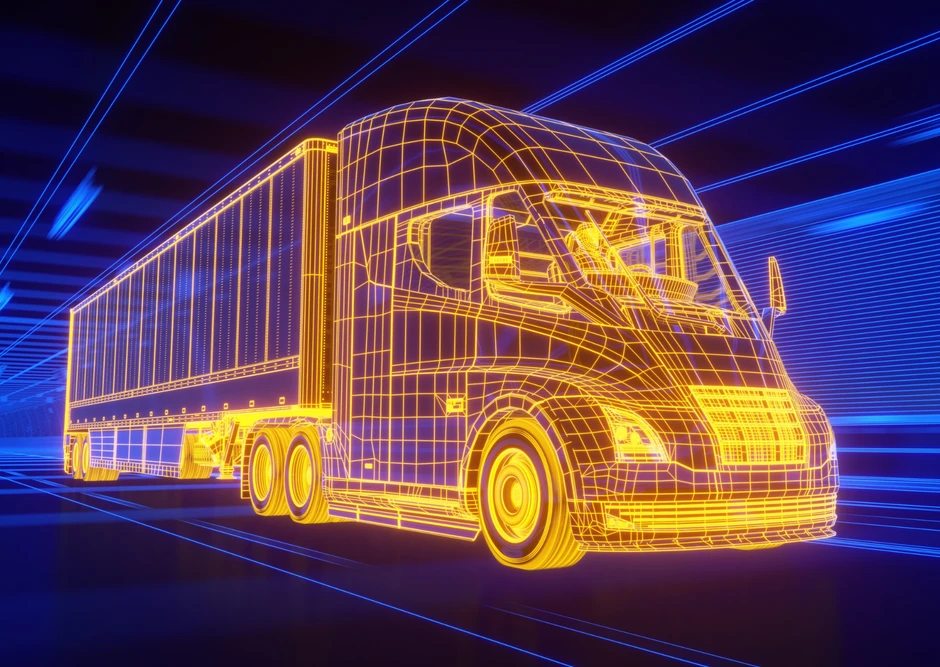
The European Commission's recent proposal to extend toll exemptions for zero-emission heavy-duty vehicles until 2031 represents a strategic move toward achieving ambitious climate targets. This initiative, part of the Strategic Dialogue on the Future of the European Automotive Industry, aims to accelerate the adoption of electric trucks by reducing operational costs and aligns directly with the EU's objective of a 43% reduction in CO2 emissions by 2030.
Transport Commissioner Apostolos Tzitzikostas emphasizes the dual purpose of this measure: "We need to create the right conditions to support European companies and reward those who move first in the transition to a low-carbon economy." By extending the exemption period, the EU offers strong incentives for companies to invest in zero-emission vehicles while reducing emissions from road transport.
The proposal now awaits approval from the EU Parliament and Council, with strong expectations of support given its alignment with climate objectives and business demands. However, the fundamental question for logistics leaders isn't whether this initiative will drive change, but rather: What information do companies need to accurately assess whether this proposal represents a worthwhile strategic investment opportunity?
Evaluating your Zero-Emissions Vehicle Strategy
While toll exemptions provide immediate cost relief, they represent just one component of a complex financial equation. The upfront investment for zero-emission vehicles remains approximately 2.5 times higher than conventional trucks. This reality creates two distinct strategic pathways for logistics leaders.
First, companies may consider electrifying their own fleets, requiring evaluation of whether toll savings sufficiently offset the capital investment premium. Second, they might choose to partner with carriers who have already invested in zero-emission fleets, necessitating assessment of how cost benefits translate into competitive pricing and service reliability.
Both scenarios share critical dependencies: route coverage limitations, charging infrastructure availability, and the actual availability of electrified services across your trade lanes. These operational constraints can significantly impact the viability of either strategy.
Two Critical Assessment Scenarios
Scenario A: Electrifying Your Own Fleet
When considering fleet electrification, logistics leaders need comprehensive data to build accurate business cases. Standard industry averages won't suffice for such significant capital investments.
Key data requirements include:
-
Route Analysis: Detailed mapping of actual routes versus optimal distances
-
Operational Patterns: Real speed profiles, idling times, and acceleration behaviors
-
Cargo Utilization: Precise load factors and empty running percentages
-
Fuel Consumption: Primary data from telematics systems rather than estimated figures
-
Infrastructure Coverage: Availability of charging stations across your trade lanes
Scenario B: Selecting Green Carriers
Alternatively, shippers may choose carriers who have already invested in zero-emission fleets. This strategy requires different but equally detailed analysis:
-
Carrier Performance: Actual versus claimed emission reductions
-
Service Reliability: Impact of charging requirements on delivery schedules
-
Cost Transparency: How toll savings translate to pricing adjustments
-
Route Coverage: Availability of electrified services across your trade lanes
-
Infrastructure Dependencies: Carrier's charging network adequacy and reliability
The Data Challenge: Beyond Industry Averages
Most fleet investment analyses rely on generic industry data rather than company-specific operational metrics. This approach proves insufficient when evaluating transformational investments like fleet electrification.
Consider these critical variables that significantly impact ROI calculations:
Vehicle Classifications: Engine specifications, emission standards, and vehicle age directly affect performance metrics. A 10-year-old truck operates differently than industry averages suggest.
Operational Patterns: Real-world driving behaviors vary dramatically from standardized assumptions. Highway speeds, urban congestion, and driver habits create substantial variations in fuel consumption.
Route Selection: Actual routes rarely match average-based distance calculations. Traffic patterns, infrastructure limitations, and operational constraints create different cost structures.
Cargo Utilization: Load factors fluctuate based on commodity types, seasonal demands, and market conditions. These variations significantly impact emissions intensity calculations. VesselBot's analysis of electric truck operations* reveals that cargo load substantially affects vehicle performance - for instance, a Tesla Semi carrying 50% load experiences a 40% reduction in range, limiting autonomy from 500 to 300 miles.
Fuel Usage: Real-time consumption data varies dramatically from theoretical calculations. Weather conditions, driver behavior, vehicle maintenance, and load characteristics create substantial variations that directly affect both consumption patterns and CO2 emissions calculations.
Electric Trucks Investment Decision Framework
Successful assessment requires sophisticated scenario modeling that goes beyond simple cost calculations. Leaders need tools that enable rapid calculations of multiple variables instead of assumptions.
Essential insights include:
-
Real-time Data Integration: Direct connections to telematics providers and operational systems
-
Scenario Modeling: Ability to test allocation changes between carriers, modal shifts between transportation modes, and different service combinations across trade lanes
-
Carrier Performance Analysis: Comparative assessment of actual emissions performance and operational efficiency across different carriers and routes
-
Cost Impact Modelling: Quantifying the financial impact of toll exemptions based on actual route usage and operational patterns
Analyzing Electric Trucks with VesselBot’s Platform
While the EU initiative creates opportunities, capturing these benefits requires precise analysis based on actual operational data. VesselBot's Logistics Intelligence Platform delivers the granular insights necessary for confident decision-making.
Our platform provides:
-
Primary Data Collection: Real-time telematics integration across all transportation modes
-
Advanced Modeling: Proprietary algorithms built on millions of shipment records
-
Scenario Testing: Automated assessment of different electrification strategies
-
Market Intelligence: Comparative analysis of carrier performance and pricing
Implementation Roadmap for C-Suite Leaders
Data Foundation Establish baseline measurements using primary operational data rather than industry averages. VesselBot's platform provides access to real-time shipment data and, when primary data isn't available, applies advanced proprietary mathematical models to achieve accurate emissions calculations. This foundation enables you to have an accurate overview of your carrier’s transportation emission levels, costs, and performance metrics across your logistics network.
Scenario Analysis Leverage unlimited, risk-free scenario testing of different strategies. Companies can instantly see the impact of reallocating shipments between carriers, shifting between transportation modes, or combining different service options. This capability of VesselBot’s Logistics Intelligence Platform allows testing various approaches to capitalize on the EU's toll exemption benefits without operational disruption.
Strategic Considerations Beyond direct cost analysis, successful implementation requires attention to broader business implications:
-
Operational Flexibility: Electric trucks show promise for short-distance urban deliveries*, but charging infrastructure limitations may constrain routing options and delivery schedules for longer routes, requiring careful service level management.
-
Competitive Positioning: Early adoption of sustainable logistics practices increasingly influences customer relationships and market differentiation opportunities. However, companies must weigh operational trade-offs, as electric trucks remain more efficient* for urban logistics while diesel trucks continue to maintain advantages for long-haul routes with heavy cargo loads.
-
Regulatory Compliance: Proactive electrification strategies position companies favorably for future emission regulations and evolving reporting requirements.
Conclusion: Evidence -Based Decision Making
The EU's zero-toll initiative represents a well-intentioned policy step toward accelerating clean transportation adoption. However, whether this initiative genuinely creates cost reduction and sustainability advancement opportunities depends entirely on individual operational circumstances and thorough scenario analysis.
Policy aspirations differ significantly from implementation reality. Companies that rely on assumptions rather than comprehensive data analysis risk making costly strategic errors. The extended timeline until 2031 provides an opportunity for methodical evaluation, but only organizations equipped with robust primary data analytics can accurately assess the true impact of toll exemptions on their specific operations.
Detailed operational analysis reveals the complexity of fleet electrification decisions. Factors such as battery weight impact on payload capacity, significant range reduction under load conditions, and charging infrastructure constraints can fundamentally alter the financial equation that toll savings aim to improve. For example, our analysis of electric truck operations* shows that electric trucks perform optimally for short-distance urban deliveries, while diesel trucks maintain efficiency advantages for long-haul routes with substantial cargo loads.
Success in navigating the evolving landscape of sustainable logistics requires sophisticated analysis that accounts for the complex interplay of policy incentives, technological capabilities, and operational realities. Organizations that invest in comprehensive primary data analysis will make more informed decisions and potentially benefit from initiatives like the EU's toll exemption program, while those relying on assumptions may find that policy promises don't translate to operational advantages.
Ready to evaluate how the EU's zero-toll initiative impacts your logistics strategy? Contact VesselBot to discover how enriched primary data analytics can guide your fleet electrification decisions with confidence and precision.
*The Road to Sustainable Logistics: Innovative Emissions Tracking and Route Optimization