From Data Collection to Decision Intelligence
The conversation around sustainability in supply chain management has fundamentally shifted. Once a topic of niche interest in Europe, sustainability has now become a central business imperative for companies in the United States and globally. What was once seen as a compliance burden or a public relations exercise has evolved into a strategic pillar of operational excellence and brand value. This transformation is driven by a convergence of different factors, including evolving consumer demands, stricter regulatory standards, and a realization that sustainable practices are intrinsically linked to operational efficiency and resilience. As the pressure to reduce carbon footprints intensifies, supply chains are beginning to realize that the first and most critical step in this journey is a data-driven approach to transportation.
The Foundational Step: Accurate Measurement by Mode
You cannot manage what you do not measure, and you definitely cannot optimize it. This principle holds especially true for carbon emissions in transportation. The initial and most foundational step for any company is to move beyond rough estimates and achieve granular, accurate measurements of its environmental impact. This process begins with getting a precise accounting of emissions by mode of transportation, including ocean, air, rail, and over-the-road trucking. By leveraging data from sources like GPS trackers, telematics devices, and smart sensors together with a deep understanding of the asset that is used, companies can begin to build a clear, data-driven picture of their carbon footprint.
This data-first approach is the "lifeblood" upon which AI models and advanced analytics can operate. Simply having a "data tsunami" is not enough; the data must be of high quality, consistent, and connected across disparate systems to provide reliable insights. When companies can trust their data, they can then use it to identify their most emission-intensive transportation lanes, the least fuel-efficient carriers, and the most wasteful operational practices. This is a crucial step that moves sustainability from an abstract goal to a tangible, measurable objective where action can be taken.
From Data to Action: Optimization and Scenario Modeling
With accurate data in hand, companies can begin the critical work of optimization and scenario modeling. This is where vendors such as VesselBot become a strategic driver for balancing profitability with environmental responsibility. Advanced algorithms and AI can take the granular emissions data and use it to model different transportation scenarios, enabling a company to make data-backed decisions that reduce its carbon footprint.
For example, a supply chain manager could use the tool to run a simulation comparing the emissions of a long-haul truck with those of a rail intermodal option. The platform could provide not only the cost difference but also the environmental impact of each choice, allowing the company to dynamically shift freight to a more sustainable option. In essence, the data becomes a strategic lever for making decisions that drive efficiency, lower costs, and support the company's sustainability commitments.
Sustainability is no longer a compliance topic, nor should it be viewed as a cost. By taking the right actions, companies can achieve major cost savings:
- Emissions reduction through data-driven carrier optimization
- Working hours saved annually by eliminating manual data collection
- Transportation cost savings through intelligent shipment consolidation
- Precise carbon credit and biofuel purchases by measuring accurately and spending strategically.
- Modal shift opportunities that lower both emissions and transportation costs
- Improved contract negotiations through real-time carrier performance insights
- Route optimization that enhances service while minimizing environmental impact
The Impact of Tariffs and Supply Chain Disruptions
Current supply chain disruptions and geopolitical shifts, particularly the implementation of tariffs, are having a profound and complex impact on sustainability. The threat of tariffs is accelerating significant shifts in global sourcing, with a McKinsey report suggesting a 30% increase in domestic sourcing by mid-2026. While this drive toward near-shoring and reshoring may reduce the emissions associated with long-distance ocean freight, it also fundamentally alters established transportation lanes and creates new logistical challenges. A reshoring initiative that reduces ocean shipments might increase the reliance on over-the-road trucking, which has its own emissions profile.
These shifts highlight the need for agility and data-driven decision-making to understand the full sustainability impact of supply chain reconfiguration. As companies move to manage these new transportation networks, it is crucial to use tools to model scenarios and ensure that the tactical shifts made to mitigate tariff pressures don't inadvertently create new environmental liabilities. The push for new zero-emission truck mandates by 2035 also underscores how these converging pressures are forcing companies to adopt a more holistic, data-first approach to transportation.
The Future of Data-Driven Decision-Making
So where is the market going? The current transformation is leading directly to the era of Decision Intelligence, where real-time sustainability data becomes the next strategic differentiator for the supply chain. Moving beyond basic visibility, the industry is entering a phase where AI-enabled execution insights drive both proactive and reactive decision-making.
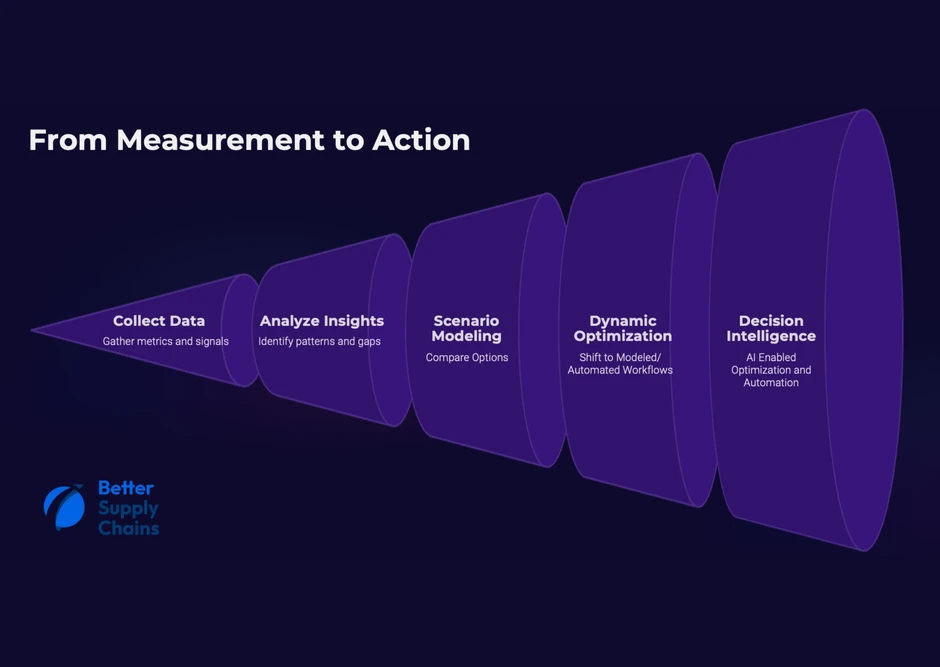
And as we progress from measurement to action (See Figure 1), it is important to understand that each step is necessary to get to the ultimate goal of Decision Intelligence. Every company will go on this journey from a different starting point based on its digital maturity and readiness where having a clear vision and strategy of the ultimate goal is critical. And while the technology is a key enabler to achieve this goal, the process has to be supported by strong leadership, change management and people focus accompanied by a partner with the right approach and support model.
Only then the true value can be unlocked. Not just from internal data, but by synthesizing a vast range of external data with internal execution records to achieve hyper-contextualized intelligence. This synthesis allows companies to use granular sustainability data to instantly model the trade-offs between cost, speed, and carbon footprint in the face of disruption.
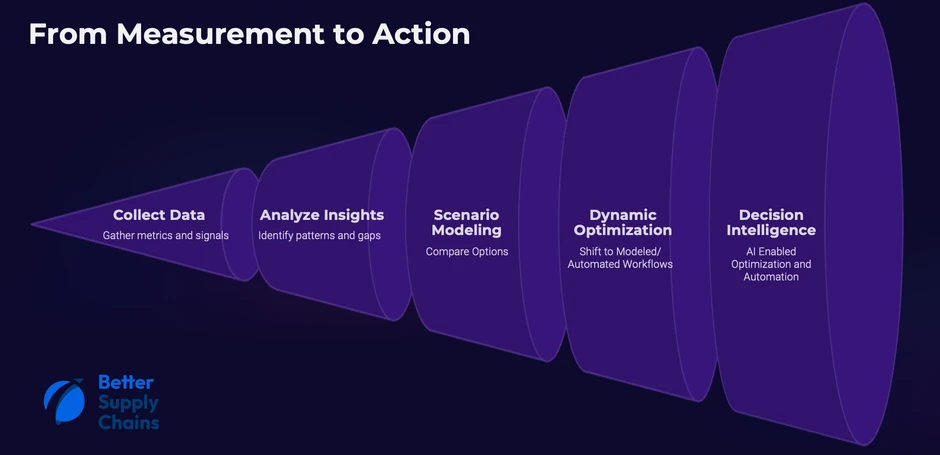
Figure 1: From Measurement to Action (Source: BetterSupplyChains)
This real-time, data-led approach is crucial not only for achieving environmental targets but also for maximizing resilience and agility, enabling automatic rerouting, dynamic mode shifts, and superior disruption management.
Conclusion
Sustainability in supply chains, particularly in transportation, is no longer an afterthought. The journey from a reactive, compliance-driven mindset to a proactive, strategic one begins with a commitment to data quality. By first getting accurate measurements of emissions by mode, companies can leverage AI, advanced analytics, and scenario modeling to optimize their transportation networks, reduce their carbon footprint, and improve operational efficiency. This path, driven by a holistic view of the supply chain, allows companies to not only navigate today's unpredictable environment but also build a more resilient, responsible, and profitable future. The greening of the grid is not just an environmental goal; it is a business imperative that is quietly becoming the backbone of tomorrow's resilient supply chain.